

Hey there! As a supplier of Mold Transfer Carts, I often get asked about the anti - collision devices of these carts. In this blog, I'm gonna break down what these anti - collision devices are, how they work, and why they're super important for Mold Transfer Carts.
What Exactly Are Anti - Collision Devices for Mold Transfer Carts?
Anti - collision devices for Mold Transfer Carts are safety mechanisms designed to prevent the cart from crashing into other objects, be it walls, other carts, or workers in the factory. These devices are like the cart's "guardian angels," constantly on the lookout to keep things safe and running smoothly.
There are a few different types of anti - collision devices commonly used in Mold Transfer Carts. Let's take a closer look at them.
Ultrasonic Sensors
Ultrasonic sensors are pretty cool. They work by emitting high - frequency sound waves. When these waves hit an object, they bounce back to the sensor. The sensor then calculates the distance to the object based on the time it takes for the sound waves to return. If the distance gets too close to a pre - set limit, the sensor sends a signal to the cart's control system to slow down or stop.
These sensors are great because they can detect objects in a wide range. They're also not affected by the color or transparency of the object, which is a big plus. However, they might not work as well in noisy environments where the sound waves could get interfered with.
Laser Scanners
Laser scanners are another popular choice. They use laser beams to scan the area around the cart. Just like ultrasonic sensors, they measure the distance to objects by calculating the time it takes for the laser light to bounce back. Laser scanners can provide a very detailed and accurate map of the cart's surroundings.
They're highly reliable and can detect small objects from a relatively long distance. But they can be a bit pricey compared to other sensors. Also, they might not work as well in dusty or foggy conditions, as the dust or fog can scatter the laser light.
Infrared Sensors
Infrared sensors work by emitting infrared light. When this light hits an object, it reflects back to the sensor. The sensor then measures the intensity of the reflected light to determine the distance to the object. Infrared sensors are relatively inexpensive and easy to install.
However, they have a shorter detection range compared to ultrasonic sensors and laser scanners. They're also more affected by ambient light, so they might not work well in bright sunlight or in areas with a lot of artificial light.
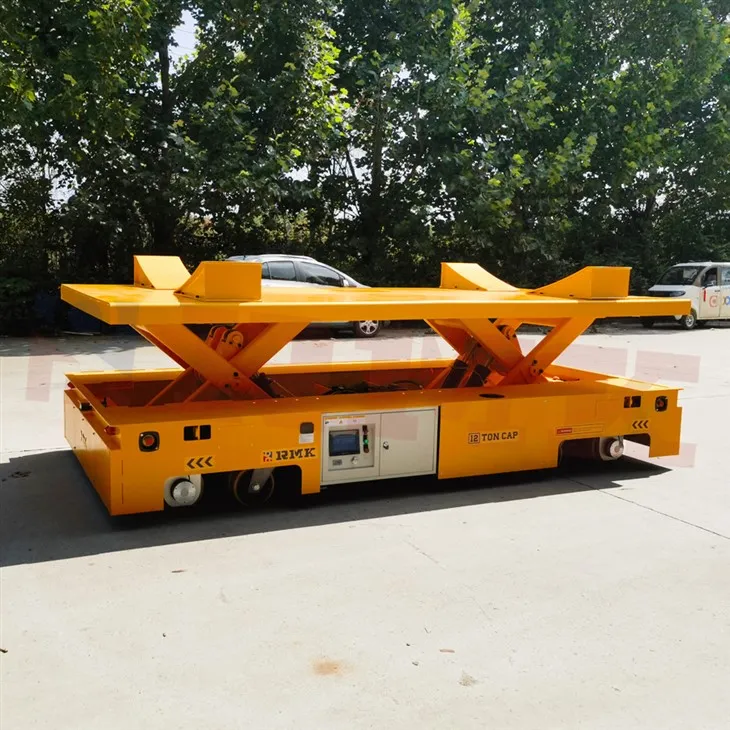

How Do These Devices Benefit Mold Transfer Carts?
Safety First
The most obvious benefit is safety. In a factory environment, there are often lots of people and equipment moving around. A collision between a Mold Transfer Cart and another object could cause serious injuries to workers or damage to the cart and other equipment. Anti - collision devices help prevent these accidents by automatically stopping or slowing down the cart when it gets too close to an object.
Increased Efficiency
These devices also improve the efficiency of the Mold Transfer Cart. Without anti - collision devices, operators would have to be constantly on the lookout for potential collisions, which can slow down the operation of the cart. With anti - collision devices, the cart can move at a more consistent speed, knowing that it will stop automatically if needed. This means faster transfer times and more productivity.
Cost Savings
By preventing collisions, anti - collision devices can save a lot of money in the long run. Repairing a damaged cart or equipment can be very expensive. Also, if a collision causes an injury to a worker, there could be medical costs and lost productivity. Investing in anti - collision devices is a smart way to avoid these potential costs.
Real - World Applications and Considerations
Let's talk about some real - world applications of Mold Transfer Carts with anti - collision devices. These carts are used in a variety of industries, such as the chemical industry, coil handling, and aerospace.
In the Chemical Industry Transfer Cart, safety is of utmost importance. Chemicals can be dangerous, and a collision could cause spills or leaks. Anti - collision devices ensure that the cart moves safely around the chemical storage and processing areas.
For Coil Transfer Cart, coils are often heavy and valuable. A collision could damage the coils, leading to significant losses. Anti - collision devices help protect these coils during transfer.
In the aerospace industry, precision and safety are key. Aerospace Transfer Cart are used to move delicate and expensive aerospace components. Anti - collision devices prevent any accidental damage to these components, ensuring the quality and safety of the aerospace products.
When choosing anti - collision devices for a Mold Transfer Cart, there are a few things to consider. First, you need to think about the environment in which the cart will operate. If it's a noisy environment, ultrasonic sensors might not be the best choice. If it's a dusty or foggy area, laser scanners might not work as well.
You also need to consider the size and speed of the cart. A larger or faster cart might require a more advanced and reliable anti - collision device. And of course, budget is always a factor. You need to find a balance between the cost of the device and the level of protection it provides.
Conclusion and Call to Action
In conclusion, anti - collision devices are an essential part of Mold Transfer Carts. They provide safety, increase efficiency, and save costs. Whether you're in the chemical industry, coil handling, or aerospace, having a Mold Transfer Cart with reliable anti - collision devices is a must.
If you're in the market for a Mold Transfer Cart or want to upgrade your existing cart with anti - collision devices, don't hesitate to get in touch. We're here to help you find the best solution for your specific needs. Just reach out, and we can start a conversation about how we can make your operations safer and more efficient.
References
- "Industrial Vehicle Safety Systems" - Various industry reports on safety systems for industrial carts.
- "Sensor Technologies for Automation" - Technical literature on different types of sensors used in automation.


