

Hey there! As a supplier of Coil Transfer Carts, I often get asked about the maximum load capacity of these nifty machines. So, I thought I'd sit down and write a blog post to share everything I know about it.
First off, let's talk about what a Coil Transfer Cart is. It's a specialized vehicle designed to move heavy coils from one place to another within a factory or industrial setting. These carts are typically used in industries like steel manufacturing, automotive, and construction, where large coils of materials need to be transported safely and efficiently.
Now, onto the main question: what's the maximum load capacity of a Coil Transfer Cart? Well, the answer isn't as straightforward as you might think. The load capacity of a Coil Transfer Cart can vary widely depending on several factors, including the design of the cart, the type of wheels it uses, the power source, and the intended application.
In general, Coil Transfer Carts can have load capacities ranging from a few tons to over 100 tons. For smaller, lighter-duty applications, you might find carts with load capacities of 5 to 10 tons. These carts are often used in smaller factories or workshops where the coils being transported are relatively small.
On the other hand, for larger, heavy-duty applications, you can get Coil Transfer Carts with load capacities of 50 tons or more. These carts are typically used in large steel mills or automotive plants where they need to move massive coils of steel or other materials.
Let's take a closer look at some of the factors that can affect the load capacity of a Coil Transfer Cart:
Design and Construction
The design and construction of the cart play a crucial role in determining its load capacity. A well-designed cart with a sturdy frame and robust components will be able to handle heavier loads than a poorly designed one. For example, carts with a reinforced steel frame and heavy-duty axles are generally more capable of handling high loads.
Wheel Type
The type of wheels used on the cart also affects its load capacity. There are several types of wheels available, including rubber wheels, steel wheels, and polyurethane wheels. Rubber wheels are often used for lighter loads and provide good traction, but they may not be suitable for very heavy loads. Steel wheels, on the other hand, are more durable and can handle heavier loads, but they may require a smooth, flat surface to operate on. Polyurethane wheels offer a good balance between durability and traction and are often used in a variety of applications.
Power Source
The power source of the cart can also impact its load capacity. Coil Transfer Carts can be powered by electricity, batteries, diesel engines, or even hydraulic systems. Electric carts are often preferred for indoor applications because they are clean, quiet, and easy to operate. However, their load capacity may be limited by the power output of the electric motor. Battery-powered carts offer more flexibility in terms of movement but may also have a limited load capacity depending on the battery size and capacity. Diesel-powered carts are more powerful and can handle heavier loads, but they are typically used outdoors due to the emissions they produce.
Intended Application
The intended application of the cart is another important factor to consider. If the cart is going to be used on a smooth, flat surface with minimal turns and inclines, it may be able to handle a higher load capacity than if it's going to be used on a rough, uneven surface or in an area with tight turns and steep inclines.
At our company, we offer a wide range of Coil Transfer Carts with different load capacities to meet the needs of our customers. Whether you need a small, lightweight cart for a workshop or a large, heavy-duty cart for a steel mill, we've got you covered.
In addition to our standard Coil Transfer Carts, we also offer customized solutions. If you have specific requirements or need a cart with a unique load capacity, our team of engineers can work with you to design and build a cart that meets your exact needs.
Now, let's talk about some of the other types of transfer carts we offer. We have an Explosion-proof Rail Transfer Trolley For Sandblasting Room which is designed for use in hazardous environments where there is a risk of explosion. This cart is built with special safety features to ensure the safety of the operators and the surrounding environment.
We also have a Chemical Industry Transfer Cart that is specifically designed for use in the chemical industry. This cart is made from materials that are resistant to chemicals and can handle the transportation of various chemical products safely.

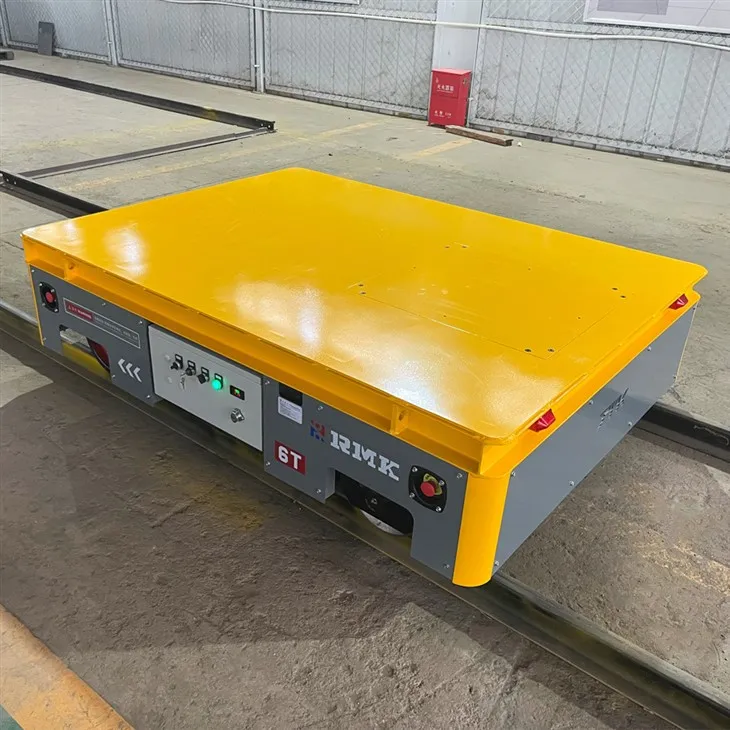
And for the foundry industry, we offer a Foundry Industry Transfer Cart that is built to withstand the high temperatures and harsh conditions found in foundries. This cart is designed to move heavy castings and other materials within the foundry efficiently.
If you're in the market for a Coil Transfer Cart or any of our other transfer carts, we'd love to hear from you. Our team of experts can help you choose the right cart for your needs and provide you with all the information you need to make an informed decision. Whether you're a small business or a large industrial corporation, we have the solutions to meet your requirements.
So, if you're interested in learning more about our Coil Transfer Carts or any of our other products, don't hesitate to reach out. We're here to help you find the perfect cart for your application and ensure that your material handling needs are met with the highest level of quality and reliability.
References
- Industrial Material Handling Handbook
- Steel Manufacturing Industry Standards


