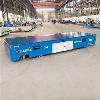
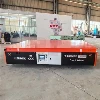
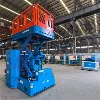
The advantages of trackless transfer vehicles mainly include the following aspects:
Flexibility: Trackless transfer vehicles do not need to lay tracks, can travel and turn freely in various terrains and environments, and adapt to different traffic conditions and working environments.
Low cost: Compared with traditional rail systems, trackless transfer vehicles have lower construction and maintenance costs. No need to lay and maintain tracks, reducing construction and maintenance costs.
Environmental protection: Usually driven by electricity or clean fuel, reducing carbon emissions and having less impact on the environment.
Safety performance: Trackless transfer vehicles are equipped with safety measures such as alarm lights and stop devices when encountering people, which improves operational safety.
Easy to operate: Usually equipped with a simple and easy-to-understand control system, operators can get started after simple training.
Strong transportation capacity: Able to carry heavier goods and meet various material transportation needs.
Intelligence: Integrate technologies such as the Internet of Things and big data analysis to provide more accurate forecasts and plans and optimize transportation efficiency.
Scalability: The system can flexibly adjust the number of vehicles and routes according to demand to adapt to different transportation needs