

As a supplier of steel transfer carts, I've witnessed firsthand the critical role that anti - collision systems play in the operation of these industrial workhorses. In this blog, I'll delve into what an anti - collision system of a steel transfer cart is, its importance, and how it functions.
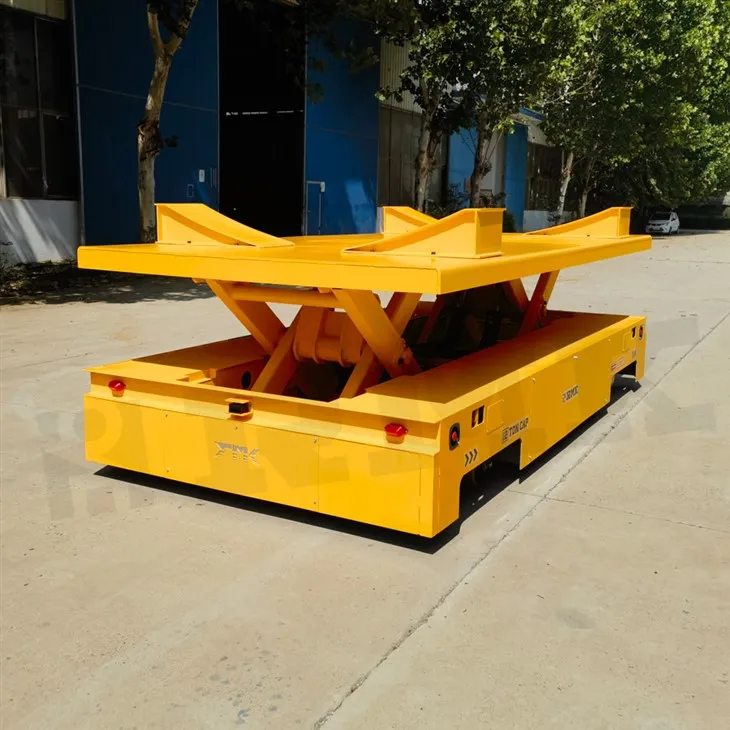

What is an Anti - Collision System for a Steel Transfer Cart?
An anti - collision system for a steel transfer cart is a set of devices and technologies designed to prevent the cart from colliding with other objects, whether they are stationary obstacles like walls, storage racks, or other moving equipment such as forklifts or other transfer carts. This system acts as a safeguard, enhancing the safety of both the equipment and the personnel working in the vicinity.
The Importance of Anti - Collision Systems
Safety First
The primary reason for having an anti - collision system on a steel transfer cart is safety. Steel transfer carts are often large and heavy, capable of carrying substantial loads. A collision can cause significant damage to the cart, the load it's carrying, and any other equipment or infrastructure in the area. Moreover, it poses a serious risk to the safety of workers. By preventing collisions, the anti - collision system helps to avoid potential accidents that could result in injuries or even fatalities.
Equipment Protection
Collisions can lead to costly repairs and downtime for the steel transfer cart. Components such as the frame, wheels, and the power system can be severely damaged in a collision. An anti - collision system helps to minimize the wear and tear on the cart, extending its service life and reducing maintenance costs over time.
Operational Efficiency
In a busy industrial environment, the smooth flow of operations is crucial. Collisions can disrupt the workflow, causing delays in the transportation of materials. An anti - collision system ensures that the steel transfer cart can move around the facility safely and efficiently, without the risk of getting stuck due to a collision.
Types of Anti - Collision Systems
Ultrasonic Sensors
Ultrasonic sensors work by emitting high - frequency sound waves and measuring the time it takes for the waves to bounce back after hitting an object. These sensors can detect objects in a certain range around the steel transfer cart. They are relatively inexpensive and easy to install. However, they may be affected by environmental factors such as temperature, humidity, and background noise.
Laser Scanners
Laser scanners use laser beams to create a detailed map of the surrounding environment. They can detect objects with high precision and are capable of detecting small objects at a relatively long distance. Laser scanners are more expensive than ultrasonic sensors but offer better performance, especially in complex industrial environments. They are also less affected by environmental factors.
Infrared Sensors
Infrared sensors emit infrared light and measure the reflection of the light from objects. They are simple and cost - effective. However, their range is usually limited, and they may be affected by sunlight or other sources of infrared radiation.
Radar Sensors
Radar sensors use radio waves to detect objects. They can work in all weather conditions and are not affected by dust, fog, or sunlight. Radar sensors are capable of detecting moving objects and can provide information about the speed and direction of the object. They are more expensive than some other types of sensors but offer high - performance detection.
How Anti - Collision Systems Work
The anti - collision system of a steel transfer cart typically consists of sensors, a control unit, and an actuator. The sensors continuously monitor the surrounding environment and send signals to the control unit. The control unit processes these signals and determines if there is a potential collision. If a collision is detected, the control unit sends a signal to the actuator, which can be a brake or a motor control device. The actuator then takes action to stop or slow down the cart to avoid the collision.
For example, if an ultrasonic sensor on the front of the steel transfer cart detects an object within a certain distance, it sends a signal to the control unit. The control unit analyzes the signal and decides whether the cart needs to stop or slow down. If the decision is made to stop the cart, the control unit sends a signal to the brake system, which engages the brakes and brings the cart to a halt.
Applications in Different Industries
Steel transfer carts with anti - collision systems are widely used in various industries. For instance, in the coil industry, Coil Transfer Cart are used to transport heavy coils of steel. The anti - collision system ensures that these valuable and heavy loads can be moved safely around the facility without the risk of colliding with other equipment or structures.
In the automotive industry, Automobile Transfer Cart are used to move car parts and assembled vehicles within the factory. The anti - collision system helps to prevent damage to the vehicles and ensures the smooth flow of production.
In the mechanical manufacturing industry, Mechanical Manufacturing Transfer Cart are used to transport large and heavy mechanical components. The anti - collision system is essential for protecting the components and the workers in the manufacturing environment.
Conclusion
The anti - collision system of a steel transfer cart is a vital component that enhances safety, protects equipment, and improves operational efficiency. As a supplier, I understand the importance of providing high - quality anti - collision systems with our steel transfer carts. Whether you are in the coil, automotive, or mechanical manufacturing industry, a reliable anti - collision system can make a significant difference in the performance of your steel transfer cart.
If you are interested in learning more about our steel transfer carts with advanced anti - collision systems or would like to discuss your specific requirements, please feel free to contact us for a detailed procurement discussion. We are committed to providing you with the best solutions for your industrial material transportation needs.
References
- "Industrial Automation Handbook", McGraw - Hill Professional
- "Safety Standards for Material Handling Equipment", American National Standards Institute (ANSI)


