

As a supplier of rail transfer trolleys, I often encounter inquiries regarding the shock - resistance level of these essential industrial vehicles. Understanding the shock - resistance level is crucial for ensuring the safety, durability, and efficiency of the rail transfer trolleys in various industrial applications.
Factors Affecting the Shock - Resistance Level
Structural Design
The structural design of a rail transfer trolley plays a fundamental role in determining its shock - resistance capacity. A well - designed frame can distribute the impact forces evenly across the trolley's body. For instance, our trolleys are engineered with a robust steel frame that is carefully welded and reinforced at critical points. This design helps to prevent localized stress concentrations that could lead to structural damage during sudden impacts. The frame is also designed to have a certain degree of flexibility, which allows it to absorb and dissipate shock energy rather than transferring it directly to the load or other components.
Suspension System
The suspension system is another key factor. A high - quality suspension can significantly enhance the shock - resistance of the trolley. Our rail transfer trolleys are equipped with advanced suspension systems that use high - performance springs and dampers. These components work together to absorb the shock generated when the trolley runs over uneven rails or collides with obstacles. The springs compress and expand to absorb the initial impact, while the dampers control the movement of the springs, preventing excessive bouncing and ensuring a smooth ride. This not only protects the trolley itself but also the goods it is carrying.
Wheel and Rail Interaction
The interaction between the wheels and the rails is also vital for shock - resistance. High - quality wheels made of durable materials, such as forged steel, can withstand the high - stress forces associated with impacts. Our trolleys' wheels are precisely machined to ensure a smooth and stable contact with the rails. Additionally, proper wheel alignment is maintained to prevent uneven wear and reduce the risk of derailment during a shock event. The rails themselves must also be in good condition, with proper installation and maintenance to minimize the impact on the trolley.
Testing the Shock - Resistance Level
To accurately determine the shock - resistance level of our rail transfer trolleys, we conduct a series of rigorous tests. These include impact tests, where we simulate various collision scenarios using controlled forces. We measure the response of the trolley's structure, suspension, and components during these tests. The data collected helps us to evaluate the trolley's ability to withstand shocks and identify any areas that may need improvement.
We also perform vibration tests to assess the trolley's performance under continuous vibrations, which can be caused by the movement of the trolley on the rails or by external factors. By analyzing the vibration patterns, we can optimize the design of the suspension system and other components to reduce the impact of vibrations on the trolley and its load.
Applications and the Required Shock - Resistance Level
Heavy - Duty Industries
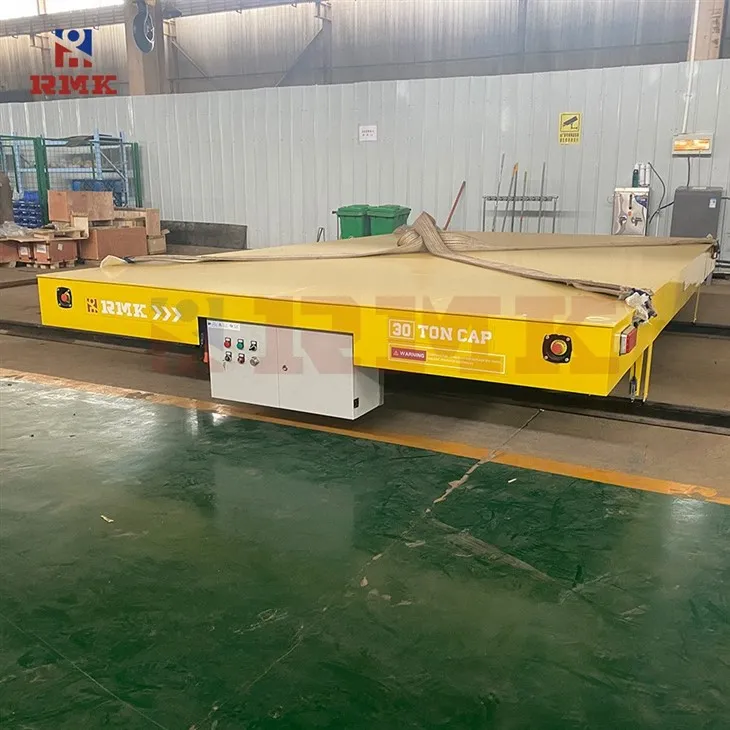
In heavy - duty industries such as mining and steel manufacturing, rail transfer trolleys are often required to carry extremely heavy loads over long distances. These trolleys need a high shock - resistance level to withstand the rough operating conditions. For example, in a mining environment, the rails may be uneven due to the movement of the earth, and the trolleys may encounter sudden impacts when loading and unloading large ore or equipment. Our 30T Battery Rail Transfer Trolley is specifically designed for such heavy - duty applications, with a high - strength structure and a robust suspension system to ensure reliable operation even in the most challenging conditions.
Precision Manufacturing
In precision manufacturing industries, such as electronics and aerospace, the shock - resistance level requirements are different. While the loads may not be as heavy as in heavy - duty industries, the trolleys need to provide a stable and vibration - free environment to protect the delicate components they carry. Our Cross - Track Rail Transfer Cart is well - suited for these applications. It features a precise suspension system and a low - vibration design to ensure that the goods are transported safely without being damaged by shocks or vibrations.
Warehouse and Logistics
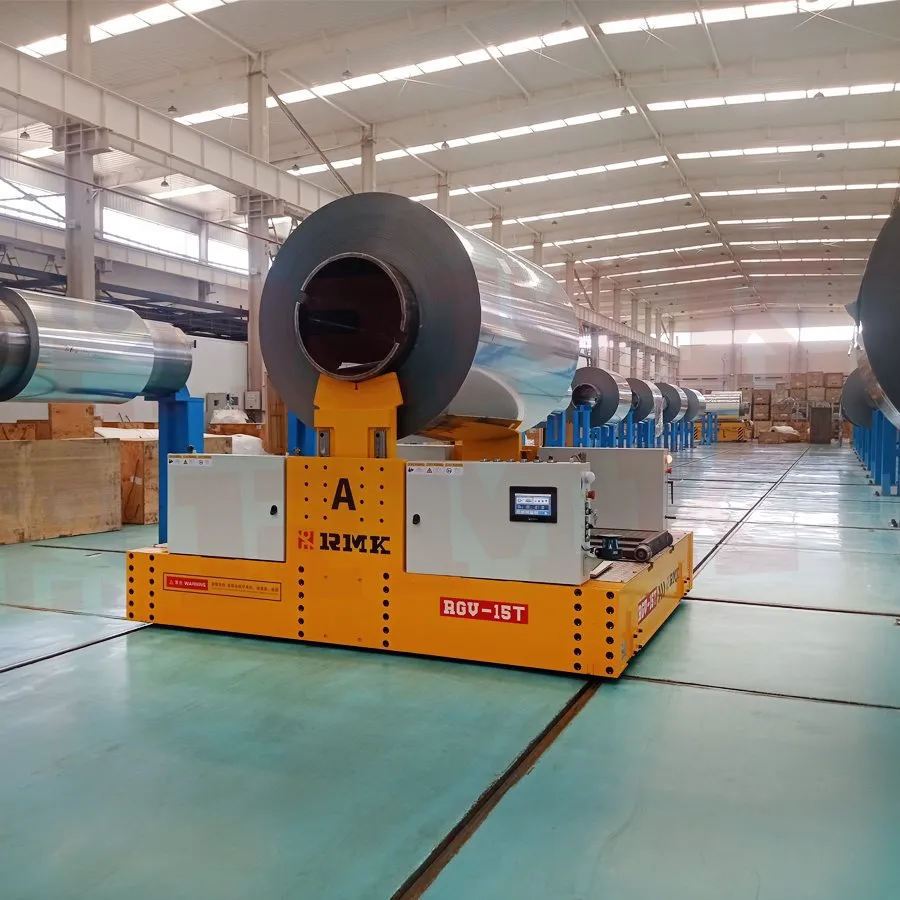
In warehouse and logistics operations, rail transfer trolleys are used for the efficient movement of goods within the facility. These trolleys may need to operate in a relatively confined space and may encounter obstacles or sudden stops. Our Forklift - Arm Rail Transfer Trolley RGV is designed with a high shock - resistance level to handle these situations. It can quickly adapt to changes in the operating environment and ensure the smooth transportation of goods.
Improving the Shock - Resistance Level
We are constantly researching and developing new technologies to improve the shock - resistance level of our rail transfer trolleys. One of the areas we are focusing on is the use of advanced materials. For example, we are exploring the use of carbon fiber composites in some of the trolley's components to reduce weight while maintaining high strength. These materials can also absorb and dissipate shock energy more effectively than traditional materials.
We are also looking into the application of smart sensors and control systems. These sensors can detect shocks in real - time and adjust the suspension system or other components accordingly. For example, if a sudden shock is detected, the control system can adjust the damping force of the dampers to provide better shock absorption.
Conclusion
The shock - resistance level of a rail transfer trolley is a critical factor that affects its performance, safety, and durability in various industrial applications. As a supplier, we are committed to providing high - quality rail transfer trolleys with excellent shock - resistance capabilities. By continuously improving our design, testing methods, and using advanced technologies, we ensure that our trolleys can meet the diverse needs of our customers.
If you are in the market for a rail transfer trolley and have specific requirements regarding shock - resistance, please feel free to contact us for more information. We are more than happy to discuss your needs and provide you with the most suitable solutions.
References
- "Industrial Vehicle Design and Technology" - A comprehensive book on the design and technology of industrial vehicles, including rail transfer trolleys.
- "Shock and Vibration Handbook" - A reference book that provides in - depth knowledge about shock and vibration analysis and mitigation.


