

Are there any physical requirements for a rail shunter? That's a question I get asked a lot, especially since I'm in the business of supplying rail shunters. Let me break it down for you.
First off, what exactly is a rail shunter? Well, it's a piece of equipment used in various industrial settings to move rail - mounted loads. Whether it's in a factory, a warehouse, or a large - scale industrial complex, rail shunters play a crucial role in the smooth operation of moving heavy items from one place to another.
Now, back to the physical requirements. You bet there are! One of the most obvious requirements is strength. Rail shunters often have to deal with extremely heavy loads. For example, if you're moving large steel beams or heavy machinery on a rail track, the shunter needs to have enough muscle to get the job done. A shunter with insufficient strength will struggle to move the load, which can lead to inefficiencies, delays, and even potential safety hazards.
Another important physical aspect is durability. Industrial environments can be tough on equipment. There are vibrations, impacts, and exposure to various elements like dust, moisture, and chemicals. A rail shunter needs to be built to last. It should be made of high - quality materials that can withstand these harsh conditions. For instance, the frame of the shunter should be made of strong steel that can resist rust and corrosion over time.
Mobility is also a key physical requirement. The shunter needs to be able to move smoothly along the rail tracks. This means having well - designed wheels and a good suspension system. The wheels should be made of a material that provides sufficient traction on the rails, allowing the shunter to start, stop, and turn easily. A poor - quality wheel can cause the shunter to slip or derail, which is a major safety concern.
In addition to these basic physical requirements, the size of the rail shunter is also important. It needs to be sized appropriately for the specific application. If it's too large, it might not fit in the available space or could be overkill for the job. On the other hand, if it's too small, it won't be able to handle the load. For example, in a small - scale factory with limited space, a compact rail shunter would be more suitable.
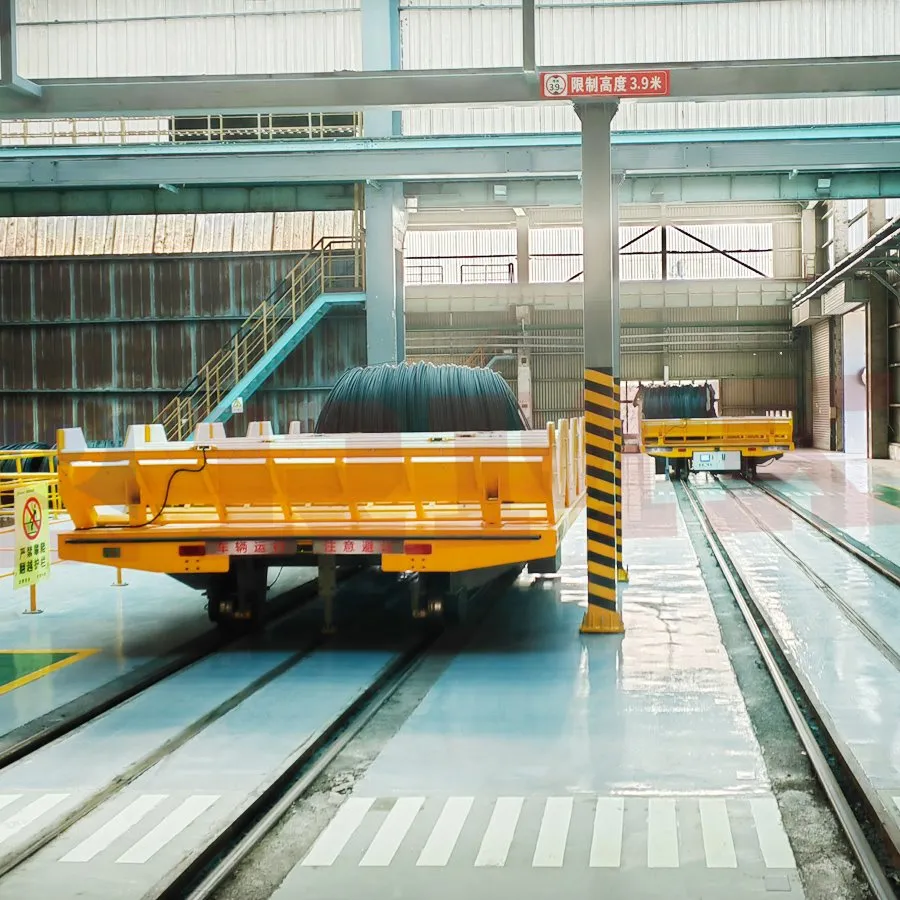

As a rail shunter supplier, I understand these physical requirements inside out... That's why we design and manufacture our products to meet the diverse needs of our customers.
We also offer a wide range of rail shunters that are designed to meet different physical requirements. For example, we have the Mold Transfer Cart which is great for moving molds in a factory or industrial setting. It's specifically designed to handle the unique requirements of moving molds along the rails, with a focus on precision and stability.
Then there's the Automobile Transfer Cart which is perfect for the automotive industry, where moving cars and automotive parts on rails is a regular requirement. And if you're dealing with steel, our Steel Transfer Cart is the go - to option. It's built tough to handle heavy steel loads with ease.
When you're in the market for a rail shunter, it's important to consider all these physical requirements. You don't want to end up with a shoddy piece of equipment that can't do the job. You need a reliable and high - performance rail shunter that meets all your industrial needs.
If you're in the market for a rail shunter, or any of our other transfer carts, don't hesitate to reach out. We're here to help you find the perfect solution for your industrial needs. We can have in - depth discussions about your specific requirements and figure out the best equipment for you. Whether it's about the strength, durability, mobility, or size, we've got you covered.
References
- Industrial Equipment Handbook
- Machinery Design and Manufacturing Manual


